Built for the people most often left out
More than a decade of research, building, and advocacy, pointed at one thing. Making healthcare technology work for the patients and clinicians who usually go unconsidered.
Studying the tools,
not just using them
I have studied patient-facing technology since 2013, a decade before the current AI wave, alongside national leaders in hospital medicine at UCSF.
Ambient AI on the
front lines of training
My lead study evaluates ambient AI scribes across four family medicine residencies, measuring their effect on documentation burden, burnout, and workflow. It won the 2025 Family Medicine Resident Award for Scholarship from AFMRD and NAPCRG. The manuscript is under review.
A documented
arc of work
Journal of Medical Internet Research
Patient recommendations to improve implementation and engagement with portals in acute care. With S.R. Greysen and A.D. Auerbach, UCSF.
View on PubMed →JAMIA
A randomized controlled trial to improve engagement of hospitalized patients with their patient portals. With S.R. Greysen and A.D. Auerbach, UCSF.
View article →JMIR Research Protocols
Using tablet computers to increase patient engagement with electronic personal health records. With S.R. Greysen, A. Rajkomar, and A.D. Auerbach.
View article →Annals of Internal Medicine
Hospital-initiated transitional care interventions as a patient safety strategy: a systematic review. With S. Rennke, R. Wachter, and others.
View article →Also author of two AHRQ patient-safety book chapters and peer-reviewed abstracts.
I do more than talk
about AI in medicine
I prototype tools, run them in my own practice, and only recommend what earns its place.
Organizations and ventures
I co-found and lead organizations that put digital health equity into practice, from Beluma Health, building for safety-net primary care, to the Alma First nonprofit.
Tools I've prototyped
CVD Compass is a working prototype I built to test an idea, a guideline-backed cardiovascular prevention aid that generates bilingual, plain-language patient handouts. It is a proof of concept, not a product in use. Building it showed me what these tools need to earn a place in real primary care.
AI I use every day
I use AI in my own practice to save time and stay current. I built automations that brief me on new clinical guidelines each week and pull together the AI and healthcare news worth knowing, so I keep learning without adding hours to my day. I test tools on myself before I recommend them to anyone.
Sharing the journey
in real time
In development, gathering feedback
Through Beluma Health, the company I co-founded, I am building an agentic AI tool for primary care and safety-net clinics, where the need is greatest. I share the journey as it happens, the problem I am solving, what I am learning, and the questions I am working through. I keep the build itself close while it takes shape. Follow along as it develops.
- AI-powered note-taking
AI scribes in
safety net settings
Digital Health Equity Collaborative, UCSF · August 31, 2026
Ambient AI scribes perform measurably worse in the languages that safety-net clinics use most. This talk pairs a 54,000-encounter evaluation from Cambridge Health Alliance with daily practice in a Sonoma County FQHC where roughly 75% of visits happen in Spanish, and sets out what a health system should validate locally before it scales a scribe.
More about this talk
Do ambient AI scribes work equally well in every language? Not in the largest evaluation to date. Across 54,000 encounters, 33,000 patients, roughly 150 providers and 28 specialties at Cambridge Health Alliance, non-English encounters were 21 to 25 percent less likely to reach the vendor's adequacy threshold of 80 percent effort reduction. The odds ratios were 0.76 for Spanish, 0.80 for Portuguese and 0.75 for Haitian Creole.
Does an interpreter change the result? No significant difference appeared between interpreter-mediated visits and visits with a bilingual provider. That raises a real-time interpretation question these tools may already be answering in practice, and that no one has studied.
What do the failures look like in an FQHC exam room? Macrobid transcribed as Migrabid. A medication name surfacing with no clinical context. Detail in a note that was never discussed in the room. Laterality dropped from an exam. Notes that read tidier than the visit actually was. The benefits are real at the same time: lower cognitive load, more eye contact, more room for health education.
Why is consent different in the safety net? A 2020 study found speech recognition error rates roughly twice as high for Black speakers. In a safety-net visit a patient may disclose immigration status, intimate partner violence, or a mental health crisis while the room is being recorded, so consent has to be meaningful, offered in the patient's own language, and explicit about retention and model training.
How strong is the evidence base? One randomized trial has been published to date. Follow-up across the literature runs 30 to 90 days. There are no patient-outcome trials, and no published studies from federally qualified health centers at all.
Hosted by the Digital Health Equity Collaborative at UCSF. Co-presented with Hannah Galvin, MD, Chief Health Information Officer and Interim Chief of Pediatrics at Cambridge Health Alliance.
Policies, procedures,
and patient trust
Aliados Health / CCI · August 18, 2026
Patient trust, not the technology itself, is what determines whether AI adoption actually works. This talk covers the legal basics (CIPA, HIPAA, Title VI/1557, AB 3030), a policy checklist, and the questions to ask any AI vendor before signing.
AI scribes in action:
lessons from a practicing physician
CTRC 2026 AI Cohort Series · August 3, 2026
AI-powered documentation tools are transforming how providers capture patient encounters. This session shares real world insights from integrating AI scribes into daily clinical workflow, covering efficiency, documentation burden, and patient interaction.
More about this talk
53 attendees. 100% agreed the content was relevant to their role, 100% found it clearly presented and well organized, and 100% agreed the presenter was knowledgeable.
76% reported a moderate or significant increase in their understanding of AI tools and implementation. 88% said they were likely to apply what they learned. 82% felt more confident helping their own organization navigate AI adoption responsibly.
"Dr. Magan did an excellent job navigating what the research showed with how we as clinicians utilize these tools. Well done."
"Keeping it focused on the patient and clinical workflows is so unique and special."
Hosted by California Telehealth Resource Center.
From clinic
to community
CTRC 14th Annual Digital Health Summit · June 2026
Patients with chronic disease spend under 3 hours a year with a clinician and manage the other 8,760 hours on their own. This talk lays out what actually works to close that gap in safety-net primary care, and how new guidelines and 2026 payment rules finally support it.
More about this talk
The math of visit-centric care is unsustainable: a single primary care physician would need 26.7 hours a day to deliver full guideline care to a 2,500-patient panel. The visit is the beginning, not the boundary.
The evidence is strong across five conditions. Telehealth lowered systolic blood pressure by 4.9 mmHg and HbA1c by 0.42% across 75 trials and more than 100,000 patients. Remote monitoring paired with nurse coaching moved average blood pressure from 152/85 to 132/74 in a year. Home monitoring is no longer an add-on: the 2025 AHA/ACC hypertension guideline and the 2026 ADA standards move home blood pressure and continuous glucose monitoring to the center of care.
What makes programs fail is routing raw device alerts into the physician's inbox. Role clarity, not technology, sustains the program. And the equity test is simple: if scaling widens the gap, it is not scaling, it is sorting.
The clinic is where care is planned. The community is where health is made.
Hosted by California Telehealth Resource Center.
A clinician in
the policy room
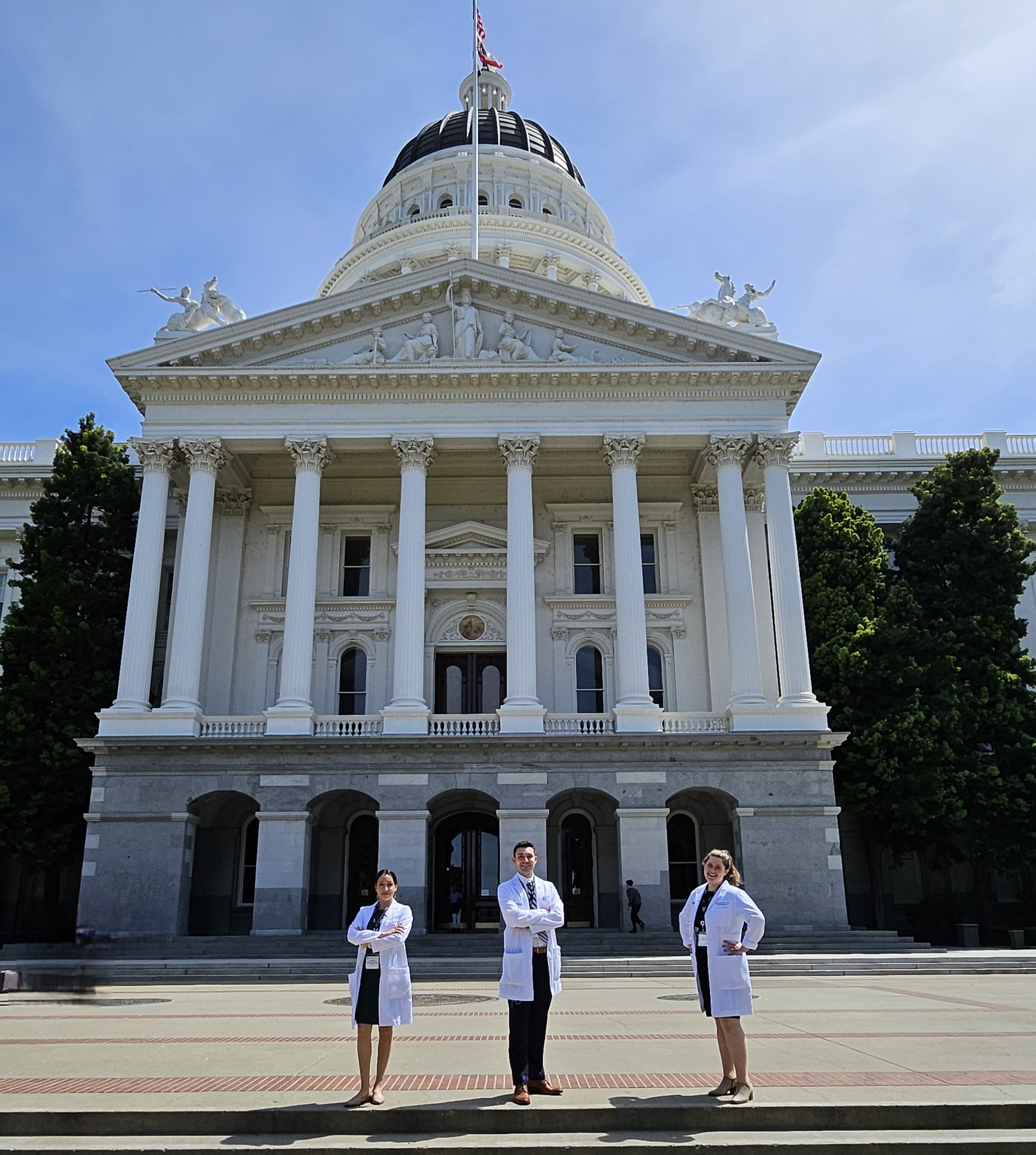
I'm Vice President of the Sonoma Mendocino Lake County Medical Association, with four years of board service, and a delegate to the California Medical Association's House of Delegates for District X.
At CMA Legislative Day in Sacramento, I spoke with legislators on protecting patients from AI deepfake impersonation of physicians, and on keeping a human in the loop when claims are reviewed by algorithm.
Training the next
class of clinicians
I have taught AI and digital health to medical students at UC Riverside School of Medicine, and I precept family medicine residents at Kaiser Permanente Santa Rosa. In residency, I co-created a Distinction track in Digital Health and AI, and an Academic Medicine and Leadership track, preparing physicians to use technology for equitable care. I mentor students and fellows moving into digital health.
Training the next generation
of digital health leaders
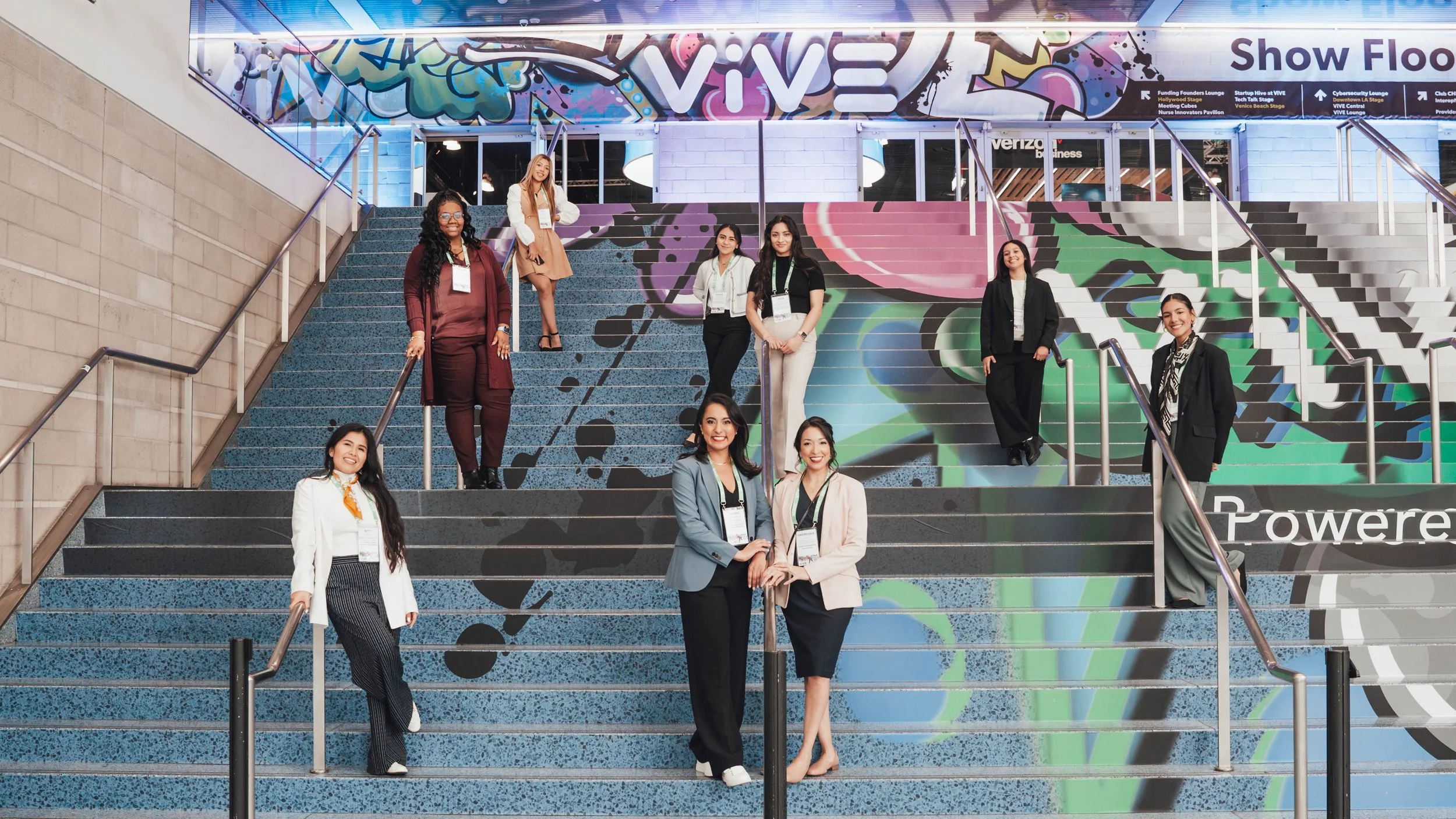
Alma First, our 501(c)(3) nonprofit, grew out of a curriculum my co-founder, Dr. Jhaimy Fernandez, created to teach digital health equity. I helped shape it into a program with a digital health and AI focus. Across five cohorts, more than 25 students have trained as digital health equity fellows, building skills in digital health, digital literacy, and equity while serving as digital navigators for underserved patients. We brought them to community health fairs and to national conferences including HLTH, HIMSS, and LMSA West. Many have gone on to medical school, careers in healthcare and informatics, or ventures of their own. This is how we train the next generation of digital health leaders. Sponsorship, not just mentorship. Not pointing to the door, but opening it for them.
Selected honors
Bring this work
to your team
For consulting, advisory work, speaking, or collaboration, I would love to hear from you.